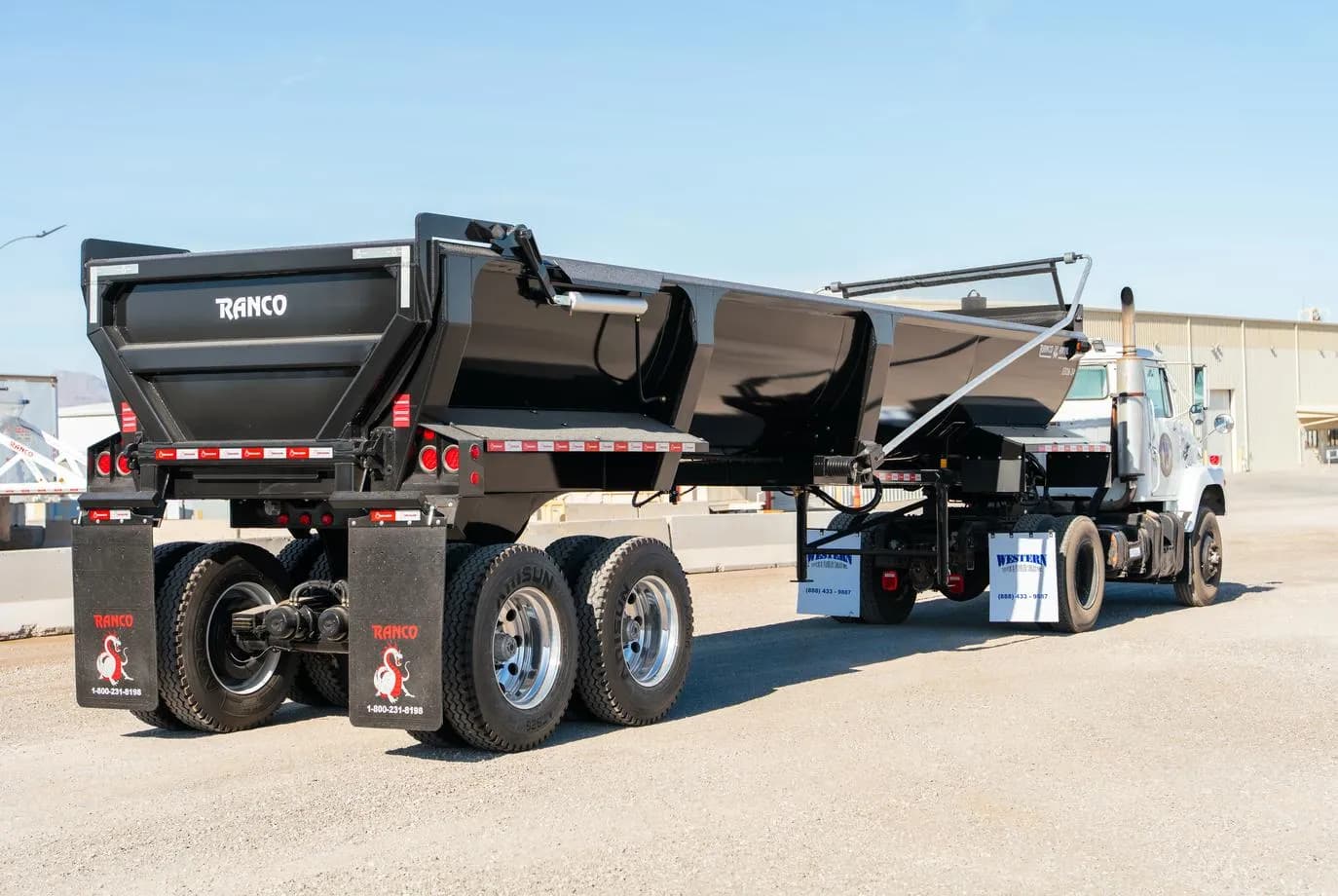



For a windrow beneath the trailer
A belly dump releases material through bottom gates. Compare it for free-flowing aggregate and road-base work where a controlled windrow suits the operation.
Explore belly dump trailersWestern Truck & Trailer supplies end dump trailers designed for hauling and unloading bulk materials such as aggregate, sand, and construction debris.
An end dump uses a hydraulic hoist to raise the front of its body and discharge material through a rear gate. It is commonly used when a load needs to be placed in a pile at a yard or jobsite.
The right build depends on what you haul, how it wears against the body, and where you unload. Start there before comparing length, volume or price.

A trailer suited to sand may not suit demolition debris. Bring the material, typical load and tractor details so the team can compare the actual equipment.
Compare dump trailer capacity in yards and tons
Review abrasion, impact and temperature requirements against the manufacturer’s intended use. Steel and aluminum builds serve different loads; do not assume an aggregate or asphalt trailer is also rated for demolition work.
Half-round describes the tub’s shape. Full-frame, quarter-frame and frameless describe its supporting structure. These are separate choices: a half-round body can be paired with different frame designs.
Cubic yards measure space, not payload. Compare the material’s density, empty trailer weight, equipment ratings and axle layout against your routes. More body volume does not automatically mean more usable tons.
Confirm the hoist’s hydraulic requirements match the tractor’s wet kit. Compare tailgate type, opening clearance, controls and tarp setup with the material and receiving area.

An end dump needs room for the raised body, the rear gate and the discharged load. Firm, level support and clearance from overhead obstructions are essential considerations when assessing a site.
Describe your regular unloading areas before choosing the trailer. If access or clearance is a problem, compare another discharge style. Always follow the specific trailer’s operating manual and the site’s procedures.
Compare other discharge stylesThe best comparison starts with where the material needs to land and how the crew will handle it next.
A belly dump releases material through bottom gates. Compare it for free-flowing aggregate and road-base work where a controlled windrow suits the operation.
Explore belly dump trailersA side dump tips its tub laterally. Compare it when the site and material call for side placement, with room for the tub movement and discharged load.
Explore side dump trailersAsk a qualified technician to assess condition and review service history. These are useful areas to discuss before a purchase or when planning maintenance.

Start with the unit you need, then discuss financing for your operation. The commercial trailer financing guide explains what to prepare and which questions to ask.
Our dump rental fleet focuses on side dumps and belly dumps. If either fits your material and unloading plan, explore those options. For an end dump, contact sales to discuss the equipment you need.
Useful distinctions to settle before you request a quote or visit the yard.
No. Body material, floor and wall construction, impact resistance and the manufacturer’s intended application matter. Tell the team what the debris contains and how it will be loaded. Some aluminum and aggregate-focused models are intended for non-demolition materials.
No. Half-round describes the shape of the tub. Quarter-frame describes the trailer’s supporting structure. A trailer may be both. Compare body shape and frame design separately, along with weight, material compatibility and operating requirements.
Check the specific trailer’s ratings and empty weight, then consider the tractor, axle configuration, material density and route. Cubic-yard capacity describes volume; it is not a payload rating. A dense load can reach a weight limit with space still left in the body.
The tractor needs a compatible hydraulic system, often called a wet kit, as well as the correct coupling and connections. Pressure, flow, oil capacity and controls depend on the hoist and trailer. Confirm compatibility from the equipment specifications before arranging pickup.
End dumps are a sales category here. The dump rental fleet focuses on side dumps and belly dumps. If one of those fits the work, the rentals team can check availability for your dates. If the job calls for an end dump, speak with sales about available equipment.
Use the listing’s stock number to confirm current availability, yard location, specifications and condition with the team. Ask about any equipment needed for your tractor and load. Guide photos illustrate trailer features and are not a live stock list.
Tell us your material, target load, tractor setup and unloading conditions. Include a stock number if a listing caught your eye, and we’ll help you compare the available equipment.