Tanks & pneumatic trailers

Pneumatic dry-bulk trailers and liquid tank units for cement, sand, and bulk material transport. New and used inventory across four yards in the western US.

View All Inventory
By Manufacturer

Shop tanks and pneumatics by brand

Explore manufacturers represented in the current listings. Model availability, specifications and factory options vary.

Tanks & pneumatics buying guide

What goes in decides what you need.

Start with the exact product, then work through how it loads, travels and unloads. Liquid tanks, vacuum trailers and dry-bulk pneumatics solve different jobs—even when they share an inventory category.

White vacuum tank trailer with a catwalk, ladder, hoses and tandem rear axles
A vacuum tank configuration. Photos illustrate equipment types; confirm the specifications and availability of the actual listing.
Choose the right starting point

Same category. Different systems.

Fluid transport and collection

Liquid & vacuum trailers

Match the tank, wetted components and transfer system to the fluid. A vacuum-equipped trailer is a different setup from a tanker intended for gravity or pump unloading.

Product
Exact fluid, density, temperature and any solids.
Tank
Material, lining, compartments and required specification.
Transfer
Vacuum or pump package, power source, valves and connections.

Powders and granular products

Dry-bulk pneumatic trailers

For suitable products such as cement, lime, sand or pellets, a pneumatic system uses air to move material through a discharge line. The product and receiving facility determine the setup.

Product
Bulk density, flow characteristics and cleanliness requirements.
Vessel
Cubic capacity, hopper arrangement and product compatibility.
Delivery
Blower supply, hose run, receiving height and connection requirements.
Shopping for a pneumatic? Share the commodity and receiving-site details with the team. Confirm sourcing, equipment configuration and lead time before planning the job.

Before you request a quote

Specify the whole system, not just the tank size.

A volume figure is a starting point. These details determine whether a unit fits your product, truck and delivery site.

  1. Product compatibility

    Confirm the shell, lining, seals, valves and hoses against the exact commodity. For used equipment, ask what it previously carried and request the available cleaning and service records.

  2. Working payload

    Compare product density and target load with trailer tare weight, equipment ratings, axle layout and the complete combination. A tank’s full volume is not a promise of legal road payload.

  3. Loading & discharge equipment

    Establish what is included and what your truck or site must supply. Ask about the pump or blower, drive arrangement, hose sizes, connections and the receiving system.

  4. Documentation & condition

    Request the data plate, build sheet, inspection and test records applicable to the unit, and maintenance history. Have the required tank specification confirmed for the commodity and service.

Rear of a gray vacuum tank trailer showing its manway, gauges, valves and access ladder
The connections, fittings and documentation deserve the same attention as capacity.
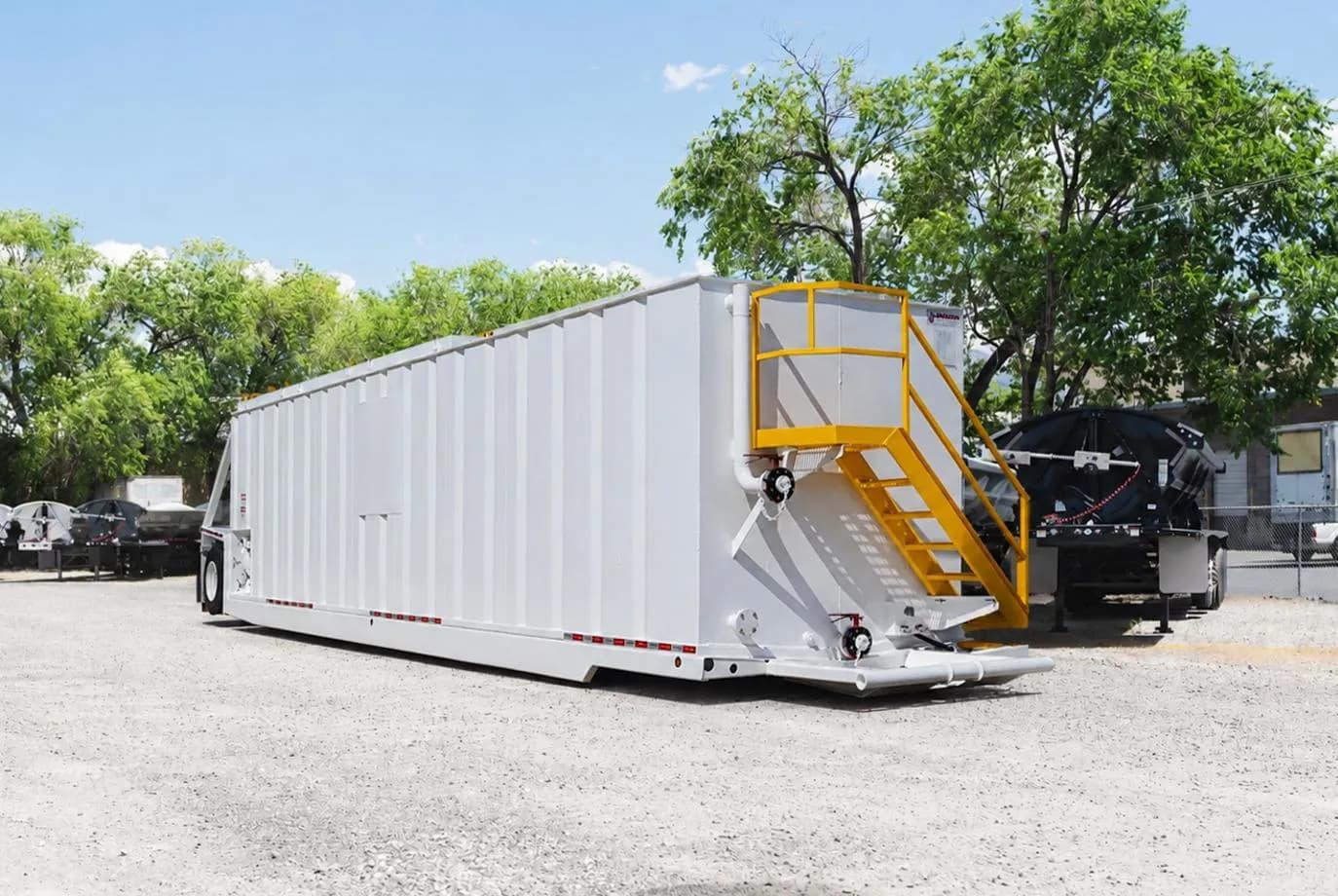
White rectangular frac storage tank with yellow access stairs and front valves
A frac storage tank: compare site footprint, connections and cleanout access.
Storing it on site?

A frac tank is a different buying decision.

When the job is holding fluid at a location, compare a storage tank rather than assuming a road tanker is the answer. A frac tank’s wheels help reposition it; they do not establish that it can travel loaded.

  • Confirm the fluid and lining compatibility.
  • Plan the footprint, access and site requirements.
  • Check valves, cleanout access and relocation requirements.
From selection to ownership

Plan for the work after the purchase.

Bring the unit’s model, serial number and service requirements to the conversation. The team can help identify the next step for parts, maintenance, financing or a rental inquiry.

Buying used?

Ask for current photos and records, then arrange an appropriate condition assessment. Confirm tank and discharge-system requirements as well as brakes, tires and suspension.

Need temporary capacity?

Check the live rental fleet and confirm a suitable configuration for your product, dates and location. A tank in the sales inventory may not be available to rent.

Before you choose

Tank and pneumatic questions, answered.

Clarify the application before comparing capacity or price.

A liquid tank contains fluid and uses a transfer arrangement suited to that fluid. A dry-bulk pneumatic trailer moves compatible powders or granules through a discharge line using air. Product compatibility, loading and discharge requirements must be checked for either type.

Not necessarily. A vacuum tanker may collect and transport suitable fluids, while hydro-excavation equipment also needs a digging-water system and a suitable debris-handling setup. Confirm the complete equipment package; a vacuum tank alone does not establish hydro-excavation capability.

No. Volume describes the space in the vessel. Product density, trailer weight, equipment ratings, axle loading and route requirements determine the usable load. Compare the proposed product and complete combination before choosing a tank size.

Start with the exact commodity and intended service, including its classification and operating conditions. Have the required specification and compatibility confirmed against the tank’s data plate, documentation and applicable requirements. “Code” or “non-code” alone is not enough to select a tank.

Do not assume so. Frac tanks are used for on-site storage, and their movement requirements differ from a loaded road tanker. Confirm the manufacturer’s intended use, transport configuration and site setup before selecting one.

Availability varies by unit and location. Use the live sales and rental listings, then confirm the exact equipment, location and timing with the team. For a dry-bulk pneumatic requirement, also confirm sourcing and the discharge equipment included.

Tell us what you are moving

Bring the product. We’ll work through the equipment.

Share the commodity, target volume and weight, loading and unloading method, location and timing. Include the stock number if you have a unit in mind.