
RGN Trailers: What They Are and How to Buy One
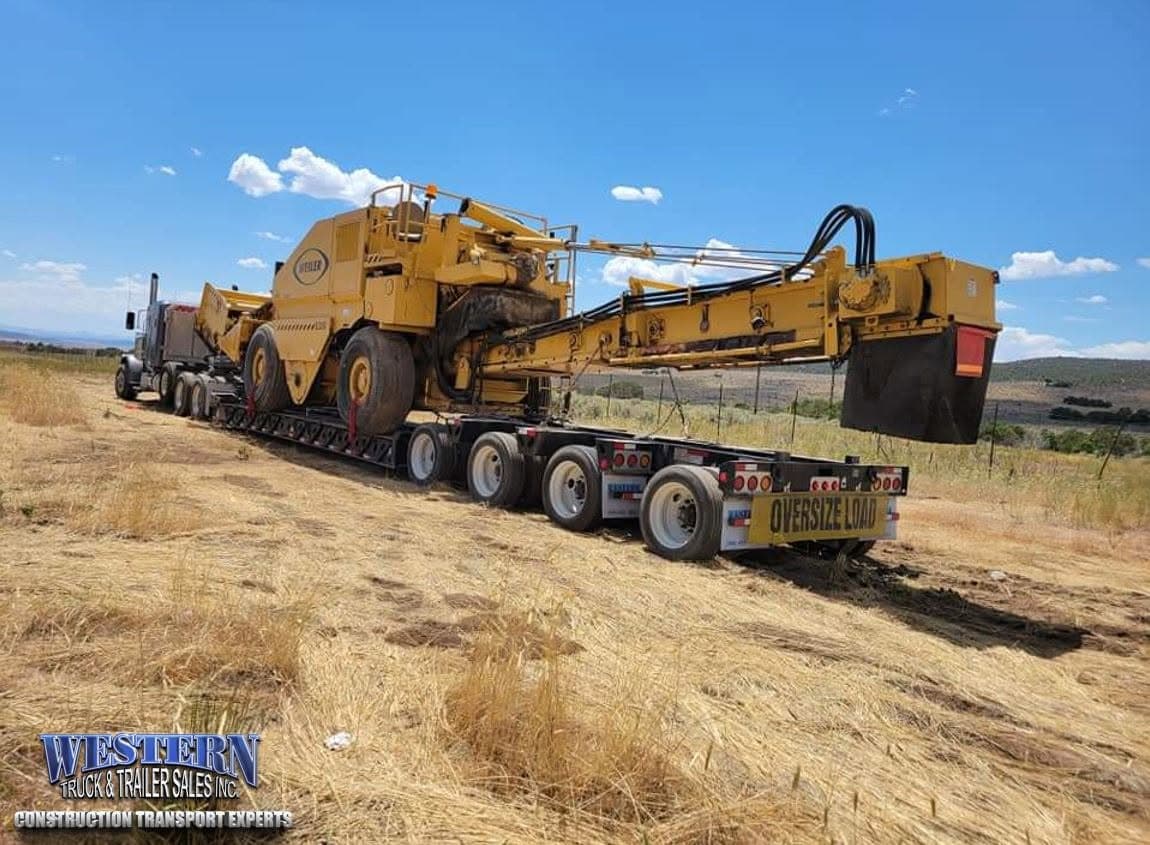
An RGN — removable gooseneck — is the lowboy you buy when you load and unload the machine yourself, because the neck comes off at ground level and the equipment walks straight up onto the well. No separate ramps, no crane, no steep climb. If you run dozers, excavators, or pavers on and off a trailer all week, this is the tool. Here's what an RGN is, how it differs from a fixed-neck lowboy, when an extendable earns its keep, and how to size one.
What makes it an RGN
The gooseneck — the front section that connects to the truck — detaches from the deck. Drop it (hydraulically on most modern units, mechanically on older ones), and the front of the low well opens into a ramp at ground level. Drive the machine on, reconnect the neck, lift, and roll. That drive-on loading at ground level is the entire reason RGNs exist, and it's why they dominate self-propelled heavy-equipment hauling.
RGN vs. fixed-neck lowboy
A fixed-neck lowboy never comes apart, so it loads from the rear over ramps or beavertails. That's fine for equipment you can back on, but it's slow and steep for tall, heavy, self-propelled iron. An RGN's removable neck trades a little tare weight and up-front cost for front drive-on loading you'll use every day. If you load and unload constantly, the RGN pays for itself in time and safety. (Comparing an RGN to a step deck instead? That's a different question — read lowboy vs. step deck.)
Extendable (stretch) RGNs
An extendable RGN telescopes to carry over-length loads — long booms, beams, and oversized machines — without overhanging the deck. You run it collapsed for normal loads and stretch it only when the load demands, so one trailer covers more of your work. Western stocks extendable RGNs, and our XL Specialized extendable lowboy is one of our best-known units for exactly these over-length jobs.
How to size an RGN (capacity)
RGNs are rated in tons, and the number climbs with the axle count. A base RGN handles roughly 35 to 50 tons; add axle groups (jeeps and boosters) and you're into legal 80-ton-plus territory, spreading the load to stay under per-axle weight laws. Size to your heaviest regular load, not the one you haul twice a year — the right axle configuration is the difference between running legal and buying permits. For the full dimension and weight breakdown, see our lowboy dimensions, height & weight guide.
What Western carries
Western sells RGN lowboys from XL Specialized, Alpha HD, and Choice, in fixed-length and extendable configurations for over-length loads. We spec the neck type, the deck length, and the axle count to what you actually haul, finance it at $0 down for qualified buyers with terms to six years, and back it with parts and service out of Salt Lake and Vegas. See what's on the yard: browse our lowboy and RGN inventory.
Frequently asked questions
- What is an RGN trailer?
- RGN stands for removable gooseneck — a lowboy trailer whose front gooseneck detaches and lowers to the ground, opening the front of the low deck into a ramp so equipment drives straight on. It's the standard trailer for hauling tall, heavy, self-propelled machines like dozers and excavators, because you load and unload at ground level without ramps or a crane.
- What's the difference between an RGN and a fixed-neck lowboy?
- An RGN's gooseneck removes so you can load from the front at ground level; a fixed-neck lowboy stays in one piece and loads from the rear over ramps. The RGN costs a little more and carries a bit more tare weight, but if you load and unload self-propelled equipment regularly, the front drive-on loading is worth it.
- What is an extendable RGN used for?
- An extendable (stretch) RGN telescopes longer to carry over-length loads — long beams, booms, and oversized machines — without the load overhanging the deck. You keep it collapsed for standard loads and extend it only when needed, so one trailer handles both.
- How much can an RGN trailer haul?
- A base RGN is commonly rated around 35 to 50 tons; adding axle groups (jeeps and boosters) pushes a combination past a legal 80 tons by spreading the load under per-axle weight limits. Western stocks RGN lowboys across these capacity classes and specs the axle configuration to your heaviest regular load.