
Lowboy vs. Step Deck: Specs, Costs & Jobsite Use Cases
Heavy Equipment Transport · 12 min read. A practical comparison to help fleet buyers choose between a lowboy and a step deck — based on what you actually haul, how often, and how far.
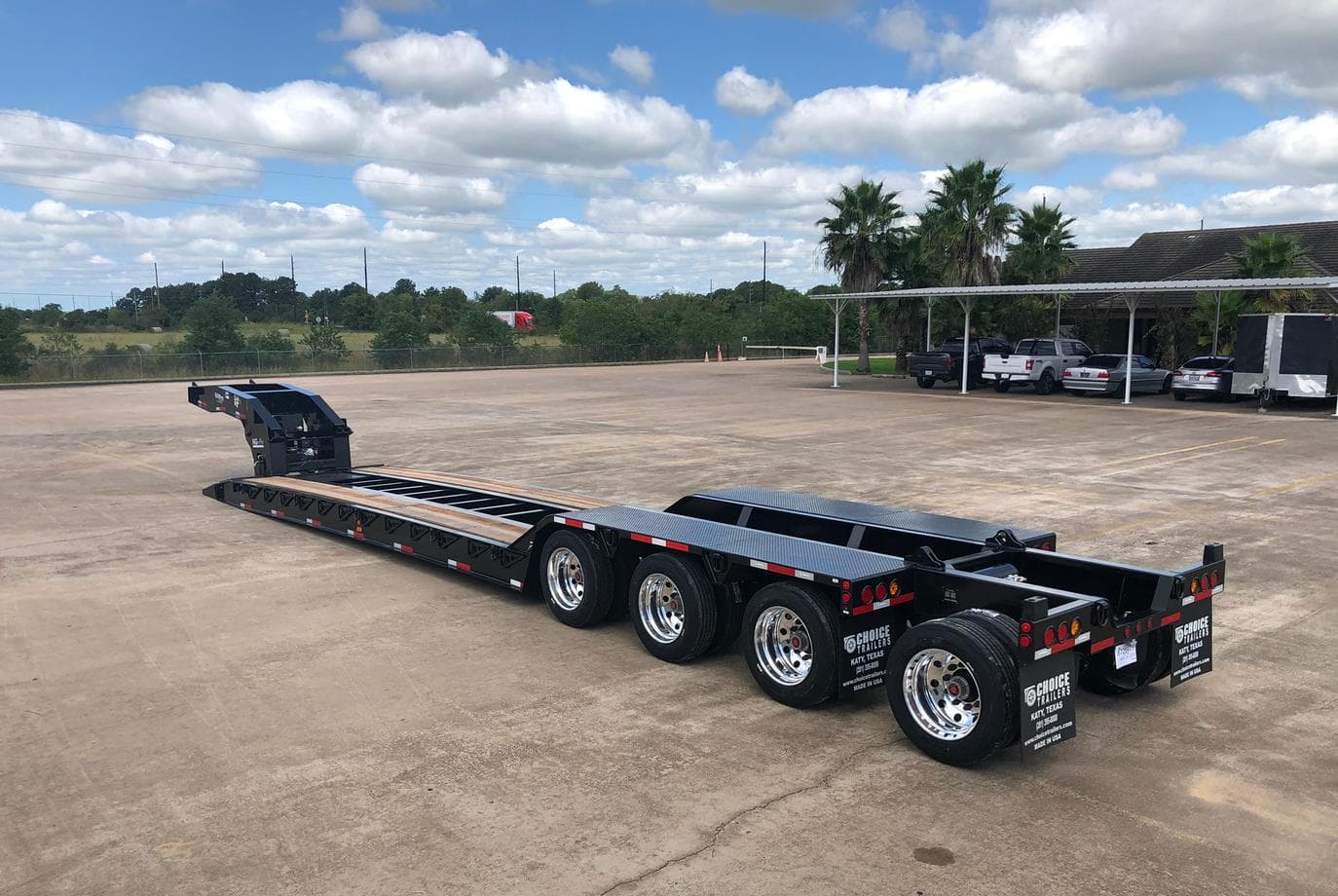
Understanding the basics
Lowboy (lowbed / double drop)
Features a recessed well designed to accommodate tall, top-heavy equipment while maintaining legal height clearance. Well depth ranges from 18–24 inches, with legal heights up to 11'6" and well lengths spanning 24–29.6 feet. Ideal for excavators, dozers, pavers, and equipment exceeding 10'2".
Step deck (drop deck)
A two-level design offering extended deck space while respecting height restrictions. Features deck heights of 36–42 inches, legal heights around 10'2", and deck lengths between 37–43 feet. Better suited for long loads, mixed freight, and equipment under 10'2".
Quick decision rule: If more than 60% of your loads exceed 10'2" in height, choose a lowboy. Otherwise, a step deck offers more versatility for daily operations.
Side-by-side specifications
| Specification | Lowboy | Step Deck |
|---|---|---|
| Deck / well height | 18–24" (recessed well) | Lower: 36–42", Upper: ~60" |
| Primary deck length | Well: 24–29.6 ft | Lower deck: 37–43 ft |
| Standard width | 8'6" (102") | 8'6" (102") |
| Max legal cargo height | Up to 11'6" | ~10'2" |
| Loading method | RGN front drive-on | Rear ramps, dock loading |
| Permit frequency | Lower for tall loads | Higher for tall loads |
Weight capacity & axle configurations
Lowboy capacities
- 2-axle: ~40,000 lbs
- 3-axle: 60,000–80,000 lbs
- Multi-axle RGN: 80,000–150,000+ lbs
Best for concentrated heavy loads in a shorter deck space.
Step deck capacities
- 2-axle: ~48,000 lbs
- Tri-axle: 60,000+ lbs
Best for longer, distributed freight loads.
Federal weight limits
- Maximum gross: 80,000 lbs (truck + trailer + load)
- Typical payload: 43,000–48,000 lbs after truck/trailer weight
- Axle limits: 12,000 lbs steer, 34,000 lbs tandem drive
Distribute weight evenly across all axles, keep loads low and centered for an optimal center of gravity, and never exceed individual axle limits.
DOT heights & permit requirements
Most states limit total vehicle height to 13'6"–14'0". Exceeding these limits requires overheight permits and potentially pilot cars.
- Standard permit cost: $15–$75 per permit, processed in 24–72 hours, route-specific.
- Permits required when total height exceeds 13'6" (most states).
- Permits required for overweight loads above 80,000 lbs or widths exceeding 8'6".
Important: Always verify current regulations with your state DOT before transport.
Real-world applications
Construction
Lowboy: excavators (tall cabs), bulldozers, road pavers, compacting rollers, large cranes. Step deck: compact backhoes, skid steers, material bundles, small tools, prefab building components.
Agriculture
Lowboy: combine harvesters, large high-cab tractors, tall balers, cotton pickers, self-propelled sprayers. Step deck: compact tractors, disc harrows and plows, seed drills, feed mixers, agricultural supplies.
Industrial
Lowboy: large compressors, industrial generators, drilling equipment, heavy pumps, tall processing equipment. Step deck: long steel skids, pipe sections, modular components, machinery parts, industrial supplies.
Investment analysis & total cost of ownership
| Type | Standard range | Heavy-duty range |
|---|---|---|
| Lowboy | $85,000 – $140,000 | Up to $250,000 |
| Step Deck | $65,000 – $95,000 | Up to $150,000 |
Daily rental rates
- Lowboy: $200–$600/day
- Step deck: $150–$400/day
- Rates vary by location, season, and specifications.
Annual ownership costs
- Insurance: $1,500–$3,000/year
- Maintenance: $2,000–$5,000/year
- Tires: $3,000–$6,000 every 2–3 years
- Storage: $600–$2,400/year
ROI break-even example
For a $120,000 lowboy used 150 days/year, daily ownership cost approximates $300 (including depreciation, financing, insurance, and maintenance). If local rental rates average $225/day, ownership becomes cost-effective above roughly 150 days of annual use.
Loading methods & safety
Lowboy — RGN loading
A detachable neck enables low-angle drive-on access, a lower center of gravity improves transport stability, and front loading reduces ground pressure damage. Ideal for heavy, self-propelled machinery with minimal ground preparation.
Step deck — ramp loading
Rear ramps provide easy drive-on access for most equipment, with dock-level loading and better ground clearance over rough terrain. Versatile for forklift, crane, and mixed-cargo loading.
Safety checklist
- Verify securement points and chain ratings.
- Check route restrictions and bridge clearances.
- Re-measure height after loading and inspect tie-downs before departure.
- Plan for pilot car requirements where needed.
Making the right choice
Choose a lowboy when
- 60%+ of loads exceed 10'2" height.
- You haul concentrated heavy equipment or top-heavy machinery.
- You need front drive-on capability and maximum height clearance.
Choose a step deck when
- Most loads are under 10'2" height.
- You need extended deck length for mixed or distributed freight.
- You want dock-level loading and maximum versatility.
Frequently asked questions
What's the legal overall height limit in my state?
Most states allow 13'6" total height, with some permitting up to 14'0". Check your specific state DOT website for current regulations and oversize permit requirements, as these can vary by route and jurisdiction.
Do I need permits for a 10'10" machine on a step deck?
Likely yes. Step deck legal cargo height is approximately 10'2", so a 10'10" machine would exceed standard limits. A lowboy might keep you under permit requirements for this height.
Can a step deck handle 60,000 lbs safely?
Yes, a tri-axle step deck can typically handle 60,000+ lbs depending on specifications. Always verify the exact weight rating on the trailer's VIN/data plate and ensure proper load distribution.
When is an RGN (Removable Gooseneck) worth the investment?
RGNs are valuable when you frequently need front drive-on loading, lower approach angles, and maximum cargo height clearance. They're especially beneficial for dozers, excavators, and pavers that are difficult to load from the rear.
What's the difference between buying new vs. used?
New trailers offer warranties, the latest safety features, and a known maintenance history but cost 30–50% more. Used trailers provide immediate availability and lower cost but require thorough inspection for wear, structural integrity, and remaining service life.
Still deciding? Our team helps fleet buyers across Utah, Nevada, Montana, and Texas spec the right heavy-haul trailer for the job.