
Usable deck length
Fixed or extendable
Check the upper and lower deck lengths separately. For beams or other long cargo, compare an extendable step deck and ask how its load rating changes with extension.
Step deck, drop deck and single drop are three names for the same trailer: a raised front deck over the tractor and a lower main deck behind it. Western Truck & Trailer has sold commercial trailers since 1983 and runs four yards across the western US. Prices and specs below are the real build sheets, not brochure ranges.
Open decks are listed together: tick a category to narrow the grid. Shopping flatbeds specifically? See the full flatbeds page.
8 / 8
 New

Call for availability
Call for price
 New
Call for availability
Call for price
 New
Call for availability
Call for price
 New
Call for availability
Call for price
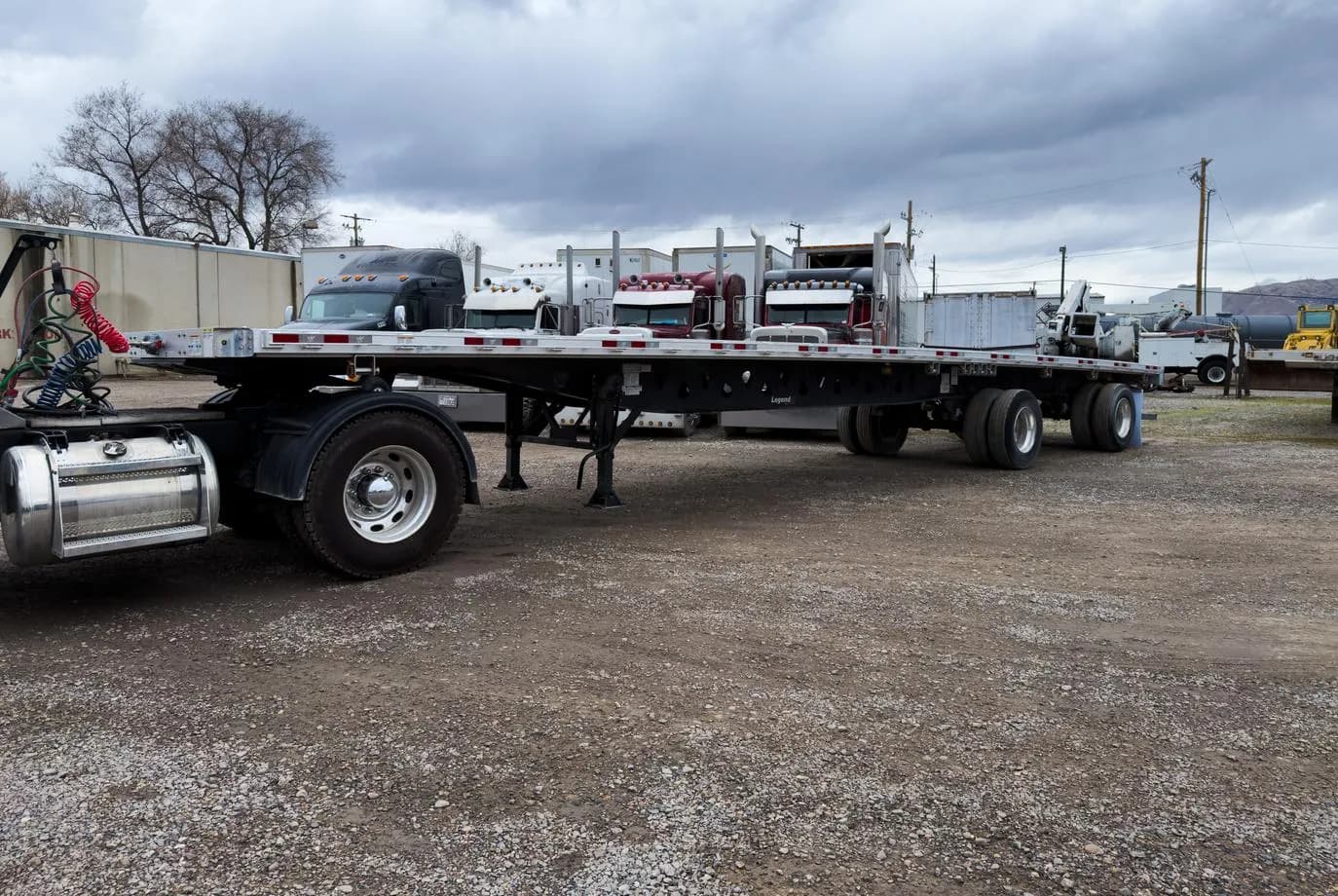 New

In stock
$47,900
 Used
In stock
$32,900
 Used
In stock
$53,900
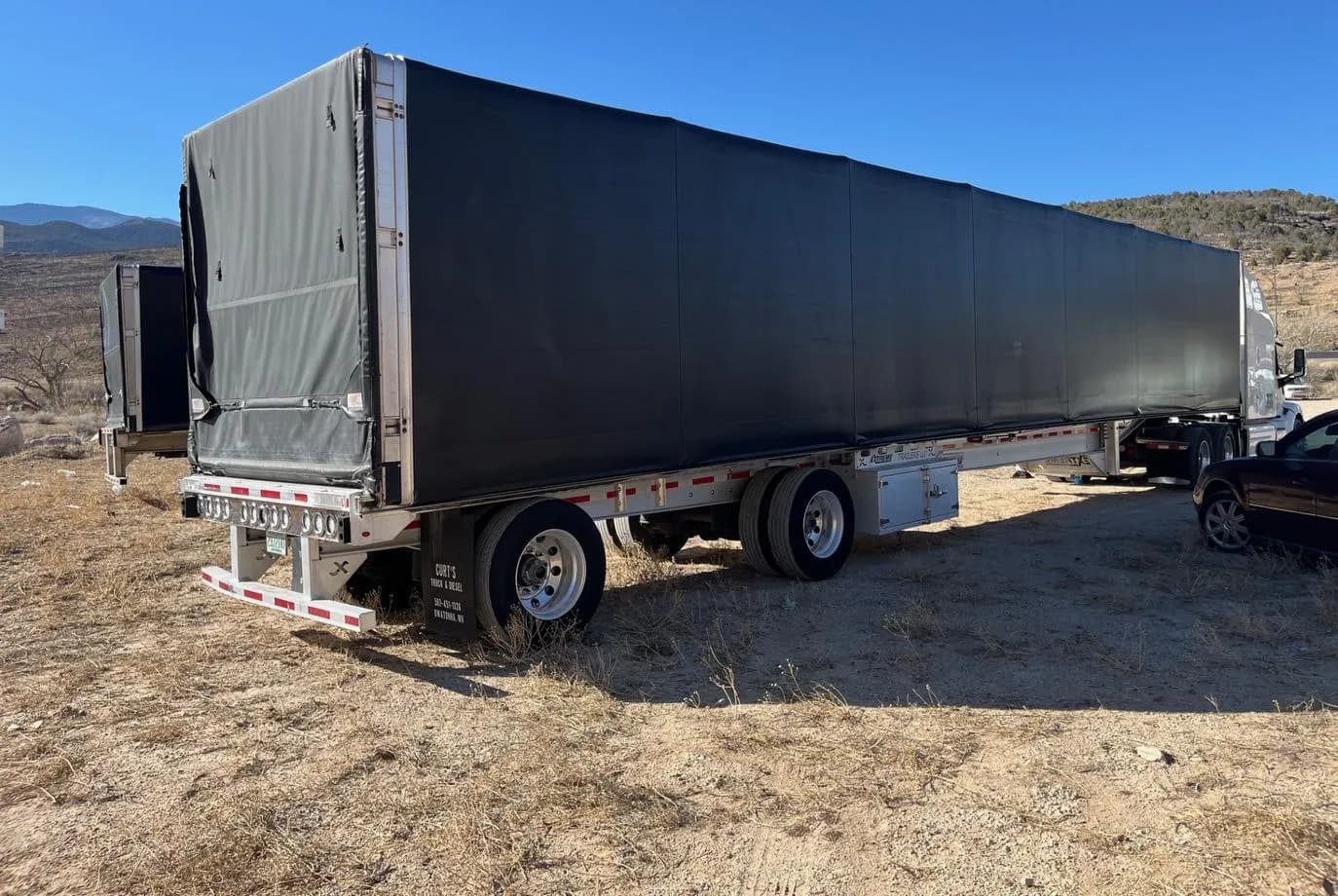 Used

In stock
$57,000
The lower main deck makes room for taller cargo. The right step deck also has to fit the load’s footprint, carry its weight where it sits, and work with the way you load it.

Use the cargo’s height in its transport position and the loaded deck height of the specific trailer. Include any blocking or supports, then check the complete combination against the planned route.
A worked example — not a route clearance
This example assumes no added blocking. It does not establish a legal height limit or confirm that a route is clear. Verify actual loaded dimensions and route requirements before dispatch.
A trailer’s distributed capacity does not mean that weight can sit in one short section. Compare the load’s weight and footprint with the concentrated-load rating, then confirm axle loading and the tractor–trailer combination.
Compare the actual specification and included equipment. Labels such as “low pro” or “53-foot” do not tell the whole story.
Fixed or extendable
Check the upper and lower deck lengths separately. For beams or other long cargo, compare an extendable step deck and ask how its load rating changes with extension.
Standard or low pro
A lower deck can help with tall cargo, but tire size, ground clearance and loading transitions also matter. Ask for the loaded height and the suspension specification.
Axles & load ratings
Share the cargo’s weight, track or wheel footprint, and intended position. Axle layout must suit the combination and route; more spacing does not automatically mean more usable payload.
Ramps, dock or crane
A step deck does not automatically include ramps. Confirm the loading method, ramp rating and width, transition clearance, and the securement points supplied with the trailer.
A step deck sits between a conventional flatbed and a lower-well trailer. Start with the load and loading method, then compare the tradeoffs.

Worth comparing when the cargo fits at the higher deck height and you want one level for pallets, bundles or long freight.
Worth comparing when overall height or equipment loading calls for a lower well or a detachable-neck configuration. Check well length and capacity as carefully as height.
Ask for current photos, service records and a condition assessment. Deck boards are one part of the review; the supporting structure and running gear matter just as much.

Compare the trailer price with the cost of getting it into service. Discuss financing for the equipment you select and the terms available to your business.
Explore trailer financingCheck the current rental fleet or ask the team about a suitable trailer for your dates, load and location. Availability and configurations vary.
Browse rental inventoryYes. Step deck, drop deck and single drop commonly describe a trailer with a raised front deck and a lower main deck. Confirm the actual deck layout on the build sheet, especially when comparing it with a double drop.
A step deck has one drop behind the upper deck. A double drop has a lower well between the front deck and the rear axle section. That lower well can suit taller equipment, but its usable length and loading arrangement differ.
There is no single answer for the category. Add the loaded deck height, the cargo height in transport position and any blocking. Verify that total against the requirements and clearances of the intended route.
Not on every step deck. Some are equipped for ramp loading; others are loaded by forklift, crane or dock. Ask what is included and confirm ramp capacity, usable width and loading clearance for your equipment.
No. Distributed and concentrated-load ratings describe how the trailer can support a load. Usable road payload also depends on the tractor and trailer weights, axle loading, configuration and route requirements.
Confirm the specific unit’s availability, current location, price and included equipment. Share your load dimensions and loading method so the team can check the configuration before you travel.
Send the cargo’s transport height, length, width and weight, plus your loading method and route. Include a stock number if a listing caught your eye. We’ll help you compare the available equipment.